

Auto ball bearings are small but critical components that support rotating parts throughout a vehicle. They are commonly found in wheel hubs, alternators, water pumps, transmission assemblies, and other moving systems. Their job is to reduce friction, support loads, and allow smooth rotation.
When an automotive bearing begins to fail, it can create noise, vibration, poor handling, and, in severe cases, a safety risk. Recognizing the warning signs early can help drivers arrange repairs before the problem causes damage to related parts.
What Are Auto Ball Bearings?
Auto ball bearings use hardened steel balls positioned between an inner race and an outer race. The balls roll instead of slide, reducing friction while carrying radial loads, axial loads, or both.
In wheel-hub applications, the bearing helps the wheel rotate smoothly while supporting vehicle weight and handling forces. Modern wheel bearings are often sealed units that retain grease and keep out water, dirt, and road debris.
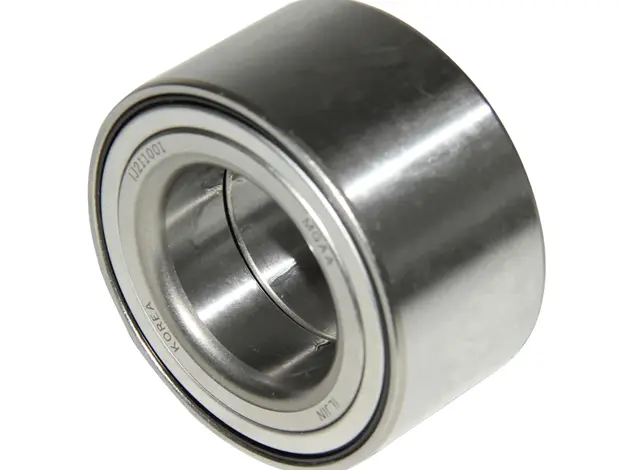
Common Signs of a Bad Auto Ball Bearing
A failing bearing may not always show visible damage, but it often creates noticeable changes while driving.
1. Humming, Growling, or Grinding Noise
One of the most common signs is a low humming, rumbling, growling, or grinding sound that becomes louder as vehicle speed increases. The noise may change when turning because cornering transfers more load to one side of the vehicle.
For example, if the sound becomes louder during a left turn, the right-side wheel bearing may be under greater load and could be the source of the problem. This is only an initial clue, however, not a final diagnosis.
2. Vibration Through the Steering Wheel or Vehicle Body
A worn wheel bearing can create vibration, especially at higher speeds. Drivers may feel it through the steering wheel, floor, or seat. Vibration can also be caused by tire imbalance, damaged tires, brake problems, or suspension wear, so a professional inspection is important.
3. Excessive Wheel Play
When a wheel bearing is severely worn, the wheel may move more than it should. With the vehicle safely lifted and supported, a technician can hold the tire at opposite points and check for unusual movement.
Excessive play may indicate a bearing issue, but it can also be caused by loose suspension or steering components. The source should be identified before replacing parts.
4. Uneven Tire Wear
A damaged bearing can affect wheel alignment and stability. In advanced cases, this may contribute to uneven or irregular tire wear. Because tire wear has many possible causes, including alignment, inflation, suspension condition, and driving habits, it should be evaluated as part of a complete inspection.
5. ABS Warning Light or Sensor Fault
Many modern wheel-bearing assemblies include an integrated ABS sensor or encoder ring. If the bearing assembly or sensor area is damaged, contaminated, or incorrectly installed, the vehicle may display an ABS or traction-control warning light.
A diagnostic scan can help identify stored fault codes, but the bearing should also be inspected mechanically.
6. Heat or Burning Smell Near the Wheel
Excessive friction inside a failing bearing can generate heat. After driving, one wheel area may feel much hotter than the others. A burning smell, smoke, or extreme heat requires immediate attention because it may also indicate a sticking brake or another serious fault.
Never touch a hot wheel, brake, or hub directly.
What Causes Auto Ball Bearings to Fail?
Automotive bearings are designed for long service life, but several factors can shorten that life:
- Water or dirt entering through a damaged seal
- Impact damage from potholes or curbs
- Incorrect installation or improper tightening torque
- Overloading the vehicle
- Corrosion
- Poor-quality replacement parts
- A damaged hub, axle, or suspension component
- Inadequate lubrication in serviceable bearing designs
Using correct installation tools and torque specifications is especially important. Pressing force applied through the wrong bearing race can damage a new component before the vehicle returns to the road.
How to Check a Suspected Bad Wheel Bearing
A proper diagnosis usually includes a road test and an inspection with the vehicle safely lifted. A technician may listen for changes in noise while cornering, rotate the wheel by hand, inspect for roughness, and check wheel play.
Professional shops may also use chassis-ear tools, vibration analysis, or diagnostic equipment to distinguish a bearing problem from tire noise, brake drag, CV-joint wear, or drivetrain noise.
Do not rely on sound alone. A quiet bearing can still be damaged, while tire tread patterns can sometimes create a similar humming noise.
Can You Drive With a Bad Auto Ball Bearing?
Driving with a suspected bad wheel bearing is not recommended. The condition can worsen quickly, increase tire and hub damage, affect handling, and create a risk of wheel-related failure in severe cases.
If the vehicle has loud grinding noise, major vibration, noticeable wheel movement, ABS warnings combined with bearing symptoms, or heat near the wheel, arrange an inspection promptly. Avoid high-speed driving and heavy loads until the problem is resolved.
When Should You Replace Auto Ball Bearings?
Replace a bearing when inspection confirms excessive play, rough rotation, noise from the bearing, physical damage, or a related sensor failure within a sealed hub assembly. Replacement should follow the vehicle manufacturer’s repair procedures.
For wheel-hub applications, it is often wise to inspect the opposite side as well, although both bearings do not automatically need replacement at the same time.
Bukaera
A bad auto ball bearing often announces itself through humming or grinding noise, vibration, wheel play, uneven tire wear, or warning lights. Early diagnosis is the best way to prevent a small bearing problem from turning into a more expensive repair.
Because several vehicle faults can produce similar symptoms, use a qualified technician to confirm the cause. Quality auto ball bearings, correct installation, and regular vehicle inspections all help support safe and reliable driving.
Post time: Jul-21-2026