
As a procurement manager, you're constantly balancing cost and quality. You see a quote for a premium industrial boul pote and then another for a fraction of the price, and you have to ask: why are bearings so expensive? Is the higher price justified? This article is for you. We're going to pull back the curtain on the cost of ball bearings, moving beyond the simple price tag to explore the intricate factors that define a pote a true value. We will dissect everything from raw material science and micron-level precision to the catastrophic hidden costs of choosing the wrong component. Understanding these factors is the key to making sourcing decisions that protect your machinery, prevent downtime, and maximize your company's profitability.
What Are the Core Material Differences in Quality Ball Bearings?
The journey of a palye begins long before it's shaped; it starts deep within the Earth with its raw materials. The single most significant factor in a pote a performance and cost is the quality of the steel used. At first glance, two bearings may look identical, but their internal composition can be worlds apart. A premium industrial palye isn't made from standard steel. It's crafted from high-purity, vacuum-degassed bearing-grade steel, such as SAE 52100 chrome steel. This specialized steel undergoes processes to remove microscopic impurities that could otherwise become the starting point for cracks and premature failure under heavy load.
The heat treatment process that follows is equally critical and cost-intensive. This isn't just a simple heating and cooling process; it's a precise science that hardens the steel to the optimal level (typically around 60-65 on the Rockwell C scale) while maintaining the necessary ductility to resist cracking under shock loads. This ensures the palye has exceptional fatigue life and durability. For highly specialized industrial applications, alternative materials come into play. A ceramic bearing, for instance, uses ceramic balls (like Silicon Nitride) that are lighter, harder, and more resistant to corrosion and heat. While these offer incredible performance benefits, the complexity and energy required to manufacture ceramic balls make them significantly more expensive than a quality steel bearing.
How Does Manufacturing Tolerance Drive Up the Cost of a Bearing?
Precision is not cheap. The difference between a high-performance boul pote and a low-cost alternative often comes down to measurements you can't even see. This is the world of manufacturing tolerance—the permissible limit of variation in the physical dimensions of a part. These tolerances are defined by international standards like ISO (International Organization for Standardization) or ABEC (Annular Bearing Engineers' Committee). An ABEC 1 or ISO Class Normal palye is suitable for a low speed application like a wheelbarrow, but the machinery in your plant requires much higher precision.
Achieving a higher tolerance rating (like ABEC 5, 7, or 9) requires multi-stage grinding and honing processes using incredibly sophisticated, computer-controlled machinery. Each stage refines the surfaces of the races and balls, making them smoother and more perfectly round. This reduces friction, vibration, and heat generation, allowing the palye to run faster, longer, and more efficiently. The investment in this machinery, the climate-controlled "clean room" environments needed to prevent contamination, and the highly skilled labor required to operate and maintain it all contribute significantly to the manufacturing costs of a high-precision boul pote. When your bearing house tells you a palye has a higher precision class, you're paying for this investment in microscopic perfection.
Are All Types of Bearings Priced Differently?
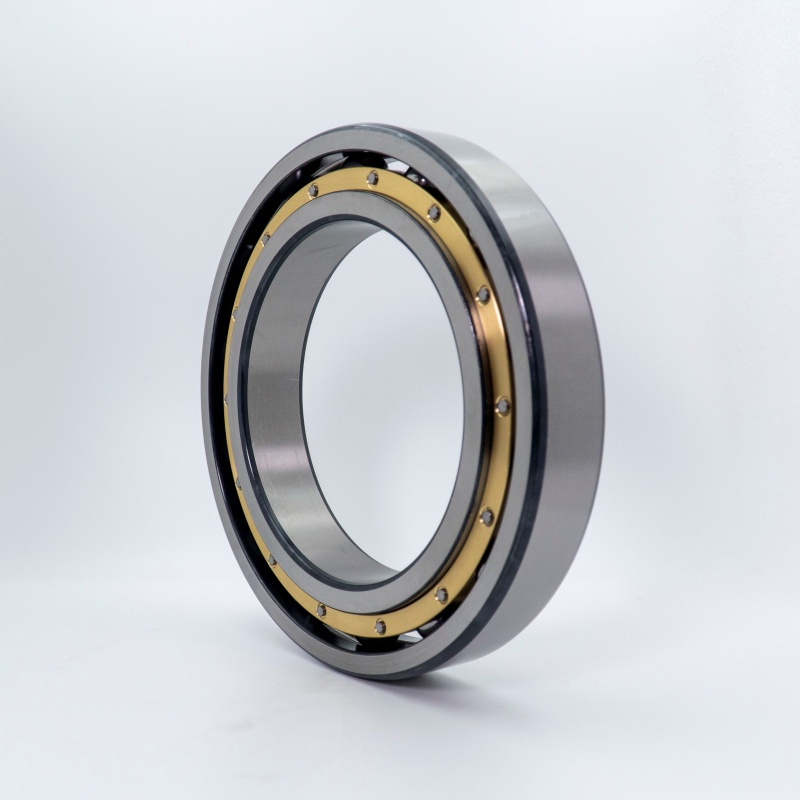
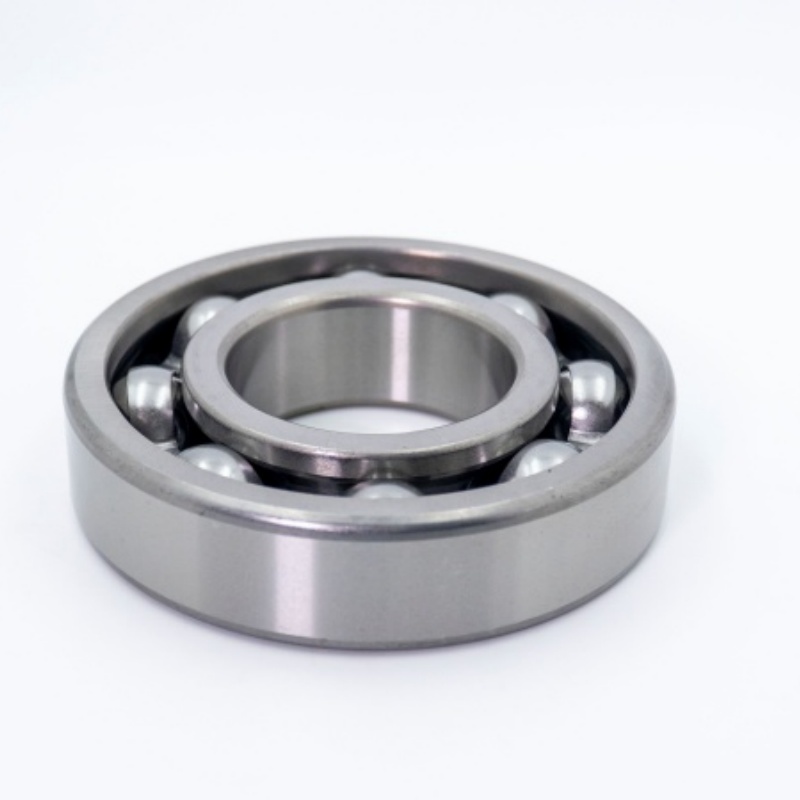
Absolutely. The term "palye" is a broad category encompassing a huge variety of designs, each engineered to handle specific types of loads and operational conditions. The complexity of the design and the amount of material and manufacturing steps required directly influence the cost. A standard deep groove boul pote, while versatile, is one of the more straightforward designs to produce. It's excellent for handling radial loads and some axial loads at high speeds.
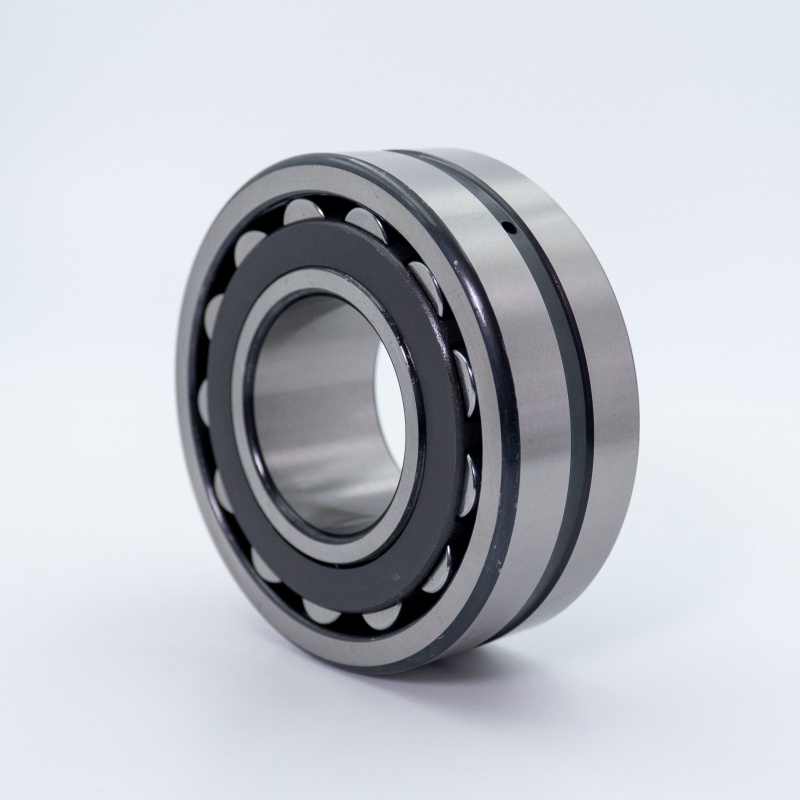
However, other types of bearings are far more complex. A spherical roller palye, for example, is designed to accommodate heavy radial loads and significant shaft misalignment. It features two rows of barrel-shaped rollers and two raceways, requiring more complex grinding and a much more intricate internal geometry. Similarly, a tapered roller palye is designed to handle immense combined radial and axial loads, common in gearboxes and wheel hubs. Its conical rollers and raceways demand extremely precise angle matching. The more complex the internal geometry and the more components a palye has, the more manufacturing steps are involved, naturally leading to a higher price. When selecting a palye, you're not just buying a part; you're investing in a specific engineering solution for a specific problem.
Why is R&D a Major Cost Factor in Industrial Applications?
A bearings in today's high-performance machinery are not the same as those from 30 years ago. Continuous research and development (R&D) is a significant, yet often invisible, cost driver for leading Konpayi fabrikasyon pote. This R&D isn't just about inventing new types of bearings; it's about constant refinement. Engineers and metallurgists work tirelessly to improve steel compositions, develop more effective heat treatment profiles, and optimize the internal geometry of a palye to increase its load capacity and service life.
For demanding industrial applications, standard off-the-shelf bearings may not be sufficient. A manufacturer like VPK Bearing often works directly with clients to develop custom solutions. This involves sophisticated computer modeling, finite element analysis (FEA), and rigorous physical testing to ensure the bearings are designed to withstand the unique stresses of a specific machine. This engineering expertise, testing equipment, and the man-hours involved are baked into the cost of high-performance bearings. When you partner with a reputable manufacturer like SKF or Toyo, or a quality-focused supplier like us, you are also paying for access to this deep well of engineering knowledge that ensures you get the right palye for the job.
What is the Hidden Cost of Inadequate Quality Control in Bearings?
This is where the pragmatic manager's risk aversion truly comes into play. A low-cost palye manufacturer saves money by cutting corners, and quality control (QC) is often the first casualty. At VPK Bearing, our QC process is multi-layered. It includes raw material verification, in-process dimensional checks at every manufacturing stage, and final testing of the finished palye for noise, vibration, and rotational accuracy. This comprehensive system ensures consistency and reliability from one batch to the next. It's our guarantee that the 1,000th palye you receive is identical in quality to the first.
Without this rigorous QC, you are exposed to immense risk. You might receive a batch of bearings with inconsistent hardness, incorrect tolerances, or microscopic surface defects. A single one of these flawed bearings installed in a critical piece of equipment can lead to premature failure. The true cost isn't the price of the faulty palye; it's the hours or days of production downtime, the cost of labor for the emergency repair, and the potential for catastrophic collateral damage to shafts, gears, and housings. In this light, the premium paid for quality ball bearings with verifiable QC is not a cost—it's an insurance policy against much larger financial losses.
How Can Lubrication and Sealing Options Impact the Final Price?
A palye doesn't work in isolation. Its performance and lifespan are critically dependent on its grese and its protection from contamination. These are not afterthoughts; they are integral design components that influence cost. The type and quality of the grease used can vary dramatically. A standard lithium-based grease might be inexpensive, but a high-performance synthetic grease designed for extreme temperatures or high speeds (like Bel Ray waterproof grease) can be many times more expensive per gram. The amount of fill and the specific formulation are chosen based on the pote a intended application.
Seals and shields add another layer of complexity and cost. A simple metal shield (a "Z" or "ZZ" suffix) is inexpensive but offers only basic protection. A non-contact rubber seal ("LLB" or "2RS") provides better protection against dust and moisture. For dirty or wet environments, a contact-lip seal ("LLU") offers the best protection but with slightly more friction. Each of these sealing solutions has a different material cost and requires a different manufacturing step to install, affecting the final price. Choosing the correct grese and sealing for your operating environment is critical for ensuring the palye reaches its full potential lifespan.
Are Industrial Bearings Really Different from Skateboard Bearings?
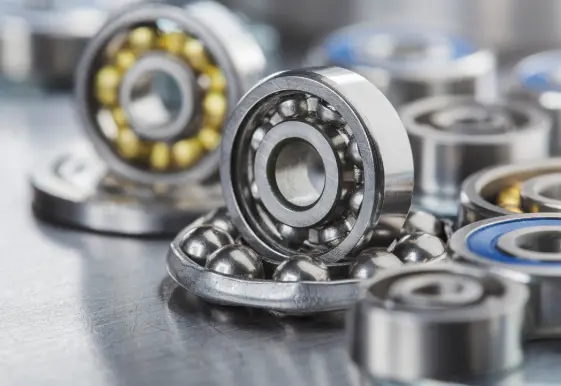
This is a fantastic question that gets to the heart of the cost discussion. On the surface, a skateboard bearing looks like a miniature version of an industrial boul pote. However, comparing them is like comparing a go-kart engine to a diesel generator. They are built for completely different worlds. The primary concern for skateboard bearings is low friction for "free spin," not long-term durability under heavy, continuous load.
Let's break down the key differences:
| Patikilarite | Industrial Ball Bearing (e.g., VPK) | Skateboard Bearing |
|---|---|---|
| Load Capacity | Designed for thousands of pounds of continuous radial/axial load. | Designed for a ~200 lb rider with intermittent shock. |
| Materials | High-purity, hardened chrome steel (SAE 52100). | Often made from lower-grade carbon or chrome steel. |
| Tolerance | High precision (ABEC 5+) for industrial speeds and low vibration. | Often have a high ABEC rating for marketing, but true industrial precision is not required. |
| Lubrication | Engineered grease for specific temperatures and loads. | Light oil for low friction, requires frequent cleaning. |
| Lifespan | Calculated for tens of thousands of hours of continuous operation. | Considered a consumable item, replaced frequently. |
| Cost | Reflects high-grade materials, precision, and engineering. | Low, reflecting simpler materials and mass production. |
A balls bearing kit for a skateboard might only cost a few dollars, but those bearings would fail almost instantly in an industrial gearbox. The engineering, materials, and precision required for industrial applications place industrial bearings in a completely different category of cost and performance. A Deep Groove boul pote used in a motor must be vastly more robust than any skateboard part.
The True Cost of a "Cheap" Bearing: The Downtime Equation
Here is the most important lesson for any procurement professional: The purchase price of a palye is only a tiny fraction of its total cost of ownership. The initial cost is visible and easy to compare, but the costs associated with failure are hidden and potentially massive. Let's say you save $50 by choosing cheap bearings for a critical conveyor motor. When that palye fails prematurely after just 20% of its expected life, what happens?
Your production line stops. The cost of lost production could be thousands of dollars per hour. You have to pay maintenance staff overtime for an emergency repair. The failing palye may have damaged the motor shaft or housing, adding hundreds or thousands more to the repair bill. All these costs—downtime, labor, collateral damage, rush shipping for a replacement—are the true costs of that "cheap" palye. An investment in good bearings from a reputable manufacturer is an investment in reliability and predictable maintenance costs. When you understand that a single palye protects an asset worth tens of thousands of dollars, the logic of prioritizing quality becomes crystal clear. An old rule of thumb is that the true bearings alone cost is small, but the cost of a failure is huge.
Navigating the Global Market: Can You Trust Overseas Bearing Manufacturers?
This is a sensitive but essential topic. There is a common sentiment to "avoid chinese bearings." This advice is overly simplistic and often misguided. It stems from negative experiences with sourcing from anonymous trading companies or factories with no quality control, where the only goal was the lowest possible price. In these cases, the price was right, but the product was a liability. However, to paint the entire Chinese manufacturing industry with this brush is to ignore the reality of the modern global supply chain.
The key is not the country of origin, but the quality and integrity of the manufacturer. A certified, experienced, and transparent manufacturer like VPK Bearing operates on a completely different level. We are an ISO9001-certified factory, not a middleman. We welcome audits, provide material certifications, and stand behind our products' durability and performance. We manufacture bearings for major industrial clients in the USA, Europe, and Australia who have the same high standards you do. The question should not be "Where was it made?" but "Who made it, and to what standard?" When you find a reliable partner that manufactures high-quality parts—whether it's SKF in Europe or a certified specialist like us with balls in China—you can achieve a cost-effective balance without sacrificing quality. A well-made kon woule woule is a precision instrument, regardless of its factory's location.
How to Identify a Cost-Effective Bearing Partner for the Long Term
Finding the best deal going isn't about finding the lowest price; it's about finding the highest value. A true partner will help you lower your total cost of ownership. When evaluating potential Konpayi fabrikasyon pote, look beyond the quote and consider these factors:
- Certifications and Transparency: Do they hold internationally recognized certifications like ISO 9001? Are they willing to share QC documentation and material specifications? A trustworthy partner has nothing to hide.
- Manufacturing Capability: Are they a direct manufacturer or a trading company? A direct manufacturer has control over the entire process, from raw materials to the finished product, like a durable Silendrik roulo.
- Ekspètiz teknik: Can their engineers speak your language? Can they provide technical support and help you select the most appropriate palye for your specific application?
- Proven Track Record: Who are their existing clients? Do they have experience serving demanding industries in your region? Testimonials and case studies are powerful indicators of reliability.
- Focus on Partnership: Do they view the transaction as a one-time sale or the beginning of a long-term relationship? A good partner is invested in your success because it ensures their own.
When you find a supplier that ticks these boxes, you've found a partner who understands that the bearings actually are a critical component of your success. The price of buying a palye from such a partner reflects a comprehensive value that ensures reliability and peace of mind.
Kle takeaways sonje
- Materials Matter: The high cost of good bearings starts with expensive, high-purity bearing-grade steel and precise heat treatments.
- Precision is Pricey: Achieving tight manufacturing tolerance requires sophisticated machinery and extensive quality control, which are major cost drivers.
- Design Complexity Varies: Different types of bearings are engineered for different loads, and more complex designs naturally cost more to produce.
- Don't Compare Apples to Oranges: A cheap skateboard bearing is fundamentally different from a high-performance industrial palye in every critical aspect.
- The True Cost is Downtime: The biggest expense is not the palye itself, but the potential cost of equipment failure. Investing in quality is an investment in operational reliability.
- Judge the Manufacturer, Not the Country: Look for certified, transparent, and experienced manufacturing partners, regardless of their location, to find the best value.
Post time: Nov-04-2025