

As a Senior Procurement Manager or MRO specialist, you know that not all components are created equal. The performance and reliability of your machinery often hinge on the quality of its most fundamental parts, like the humble bearing. This guide is designed for professionals like you who need a deep, practical understanding of one of the most versatile components in the industry: the pillow block bearing. We will explore the different types, from the common UC insert ball bearing to heavy-duty roller bearing units. At VPK Bearing, we believe that an informed partner is a successful partner. This article will provide the essential knowledge you need to select the right product, reduce downtime, and find a reliable Chinese manufacturing partner you can trust for the long haul.
A Basic Description of the Pillow Block Bearing: What Is It?
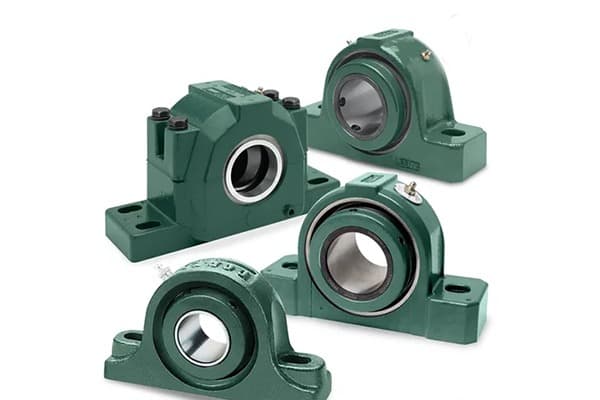
Let's start with the basics. A pillow block bearing (or plummer block) is not a single bearing. Instead, it's a mounted bearing unit. Think of it as a pre-packaged system. It consists of two main components:
- An insert bearing: This is the actual bearing that facilitates motion. It can be a ball bearing or a roller bearing.
- A housing: This is the outer block that encases the insert bearing and gets mounted to a surface.
The key advantage of this design is simplicity. The housing provides a stable foundation, allowing the entire unit to be easily mounted onto a machine frame. This supports a rotating shaft that passes through the center of the insert bearing. The name "pillow block" comes from the fact that the housing typically looks like a small block or pillow supporting the shaft. This integrated design makes the pillow block bearing an incredibly popular and cost-effective solution for a huge range of industrial equipment. They are designed to support a shaft where the mounting surface is parallel to the shaft axis.
This mounted unit simplifies the design and assembly of machinery. You don't need to engineer a precise bore in the machine frame to hold a bearing. Instead, you simply bolt the pillow block housing into place. This saves time, reduces manufacturing complexity, and makes maintenance much easier. A worker can replace an entire pillow block bearing unit far more quickly than pressing a standalone bearing in and out of a tight-fitting bore. This efficiency is a critical factor in many industrial operations.
The insert bearing itself is typically a modified deep groove ball bearing, designed specifically for this type of application. Its outer ring is convex or spherical, and the inner bore of the housing has a matching concave shape. This clever design allows the insert bearing to swivel within the housing. This feature is incredibly important because it allows the unit to compensate for initial misalignment of the shaft, a common issue in many installations. This self-aligning capability prevents excessive stress on the bearing, leading to a longer service life and more reliable operation.
What are the Key Parts of a Pillow Block Bearing Unit?
To truly understand this product, you need to know its parts. A pillow block bearing unit is more than the sum of its parts, but knowing each component helps in selection and maintenance.
1. The Housing:
The housing is the foundation of the unit. It's typically made from cast iron for strength and vibration dampening, but can also be made from ductile iron, pressed steel for light-duty applications, or stainless steel for corrosive environments. The housing has bolt holes in its base to secure it to the machine frame. Its primary job is to protect the insert bearing from contaminants and to safely transfer the load from the bearing to the machine structure.
2. The Insert Bearing:
This is the heart of the unit. As we mentioned, it's usually a type of ball bearing, but can also be a roller bearing. Let’s look at its own key parts:
- Outer Ring: The outside surface of the outer ring is spherical. This allows it to pivot inside the housing, accommodating misalignment. This feature is crucial for the longevity of the bearing system.
- Inner Ring: This is the part that fits onto the shaft. One of the most important features of an insert bearing is its locking mechanism. The inner ring is often extended on one or both sides to accommodate set screws or an eccentric locking collar. This mechanism is used to firmly secure the bearing to the shaft and prevent any slippage during operation.
- Rolling Elements: These are either balls (making it a ball bearing) or rollers (making it a roller bearing). They are the components that allow for low-friction motion between the inner ring and outer ring.
- Cage: This component keeps the rolling elements evenly spaced, ensuring the load is distributed properly and preventing the balls or rollers from rubbing against each other.
- Seals and Flingers: The insert bearing is almost always a sealed unit. It has seals on both sides to keep lubricant in and contaminants like dust and moisture out. Many also have an additional metal shield called a flinger for extra protection in harsh working conditions.
Ball Bearing vs. Roller Bearing: Which Insert Type is Right?
The choice between a ball bearing insert and a roller bearing insert is one of the most critical decisions you'll make. It all comes down to the type of load your application involves. The fundamental difference lies in how each bearing type makes contact with the raceways.
A ball bearing makes a very small, precise point of contact. This design is excellent for handling high speeds and is very efficient with low friction. It is the most common type of insert bearing found in pillow block units. A standard ball bearing insert is fantastic at handling radial loads (loads perpendicular to the shaft) and can also manage light to moderate thrust loads (loads parallel to the shaft). This versatility makes the ball bearing pillow block a go-to choice for general-purpose machinery, conveyor systems, and fans.
A roller bearing, on the other hand, makes a line of contact. This larger contact patch allows a roller bearing to support much heavier loads than a ball bearing of the same size. If your machine operates under heavy or shock loads, a roller bearing insert is the superior choice. There are different types of roller bearing inserts:
- Spherical Roller Bearing: This type of bearing has two rows of barrel-shaped rollers. It has an exceptional load carrying capacity for heavy radial loads and can also handle significant thrust loads in both directions. The "spherical" design also gives it excellent self-aligning capabilities, even better than a ball bearing insert.
- Taper Roller Bearing: This roller bearing design uses conical rollers and raceways. A taper roller bearing is exceptional at handling combined loads—that is, both heavy radial and heavy thrust loads simultaneously. A single taper roller bearing can only take thrust in one direction, so they are often mounted in pairs.
So, the rule of thumb is: for high speed and light-to-moderate combined loads, a ball bearing insert is ideal. For heavy loads, shock loads, and significant misalignment, a spherical roller bearing insert is the answer. For heavy combined radial and thrust loads, a taper roller bearing unit is what you need.
What are the Basic Types of Pillow Block Housings?
While the insert bearing handles the motion, the housing determines how the unit mounts to your equipment. The naming convention, often starting with "UC," refers to the insert type, followed by letters that describe the housing shape. Here are the most common types you’ll encounter:
- UCP (Pillow Block): This is the most common and popular type. The "P" stands for Pillow. It has a solid base with two bolt holes for mounting on a flat surface. Our UCP201 pillow block bearing is a prime example of this versatile product.
- UCF (Flange Unit): The "F" stands for Flange. This housing is square with four bolt holes. It’s designed to be mounted on a vertical surface or machine wall.
- UCFL (Two-Bolt Flange Unit): This is a diamond or rhombus-shaped flange unit with two bolt holes. It’s perfect for applications where mounting space is limited. The UCFL201 bearing unit is ideal for these lighter-duty or space-constrained applications.
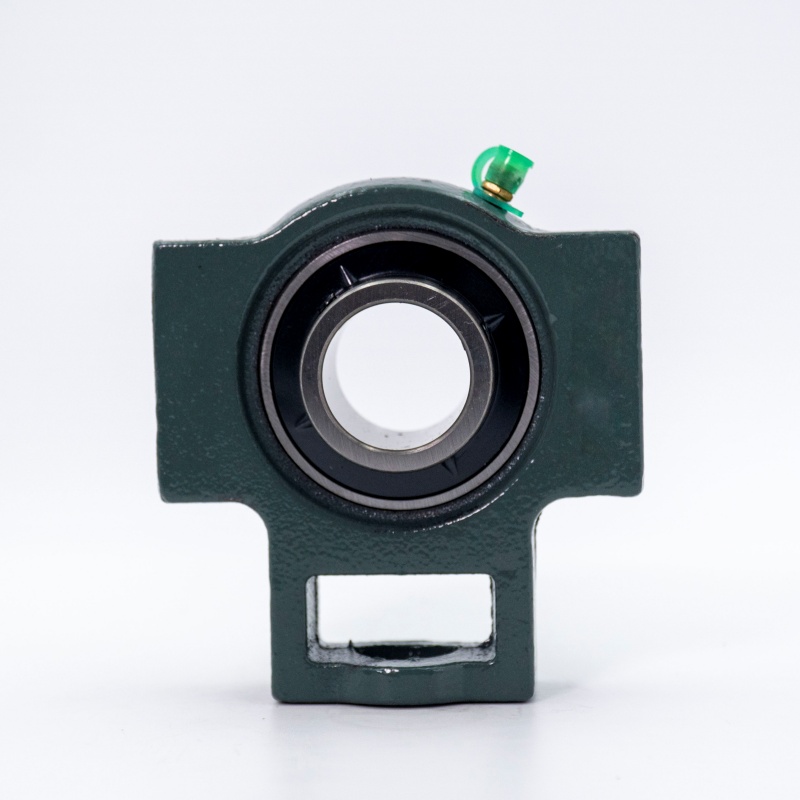
- UCT (Take-Up Unit): The "T" stands for Take-Up. This housing is designed to slide in a frame. A tensioning screw is used to move the entire unit to adjust the position of the shaft, often to tighten a conveyor belt or chain.
Each housing design provides a specific solution for mounting a bearing safely and effectively. Understanding these basic types allows you to select the correct product that will physically fit your machine's design and requirements. The bearing inside each of these can be the same UC type ball bearing; only the housing changes.
Why is the UC Insert Bearing a Popular Product Choice?
The "UC" designation refers to the most common series of insert ball bearing. When people talk about a pillow block bearing, they are very often referring to a unit that contains a UC type insert. Its popularity comes from a simple, robust, and effective design.
The defining feature of the UC insert bearing is its locking mechanism: two set screws in the extended inner ring. These screws are typically spaced 120 degrees apart. When tightened, they press directly onto the shaft, locking the inner race in place and preventing it from spinning on the shaft. This method is straightforward, reliable, and requires only a simple hex key for installation.
This design provides several key benefits:
- Ease of Installation: The unit can be easily mounted and secured to the shaft in minutes.
- Reversibility: The set screw design works equally well for shafts that rotate in one direction or reverse direction.
- Good Holding Power: For most general industrial applications, the set screws provide more than enough clamping force to handle the operational torque and load.
The UC insert is a true workhorse. It's a general-purpose ball bearing designed for reliability and ease of use. It's the standard insert found in the vast majority of UCP, UCF, and UCFL units used across every industry. While other locking mechanisms exist (like eccentric locking collars or adapter sleeves), the UC set screw type remains the most widely used due to its perfect balance of performance, cost, and simplicity.
When Should You Use a Spherical or Taper Roller Bearing?
While the ball bearing pillow block is the default for many applications, there are times when you absolutely need the superior strength of a roller bearing. As an MRO manager, knowing when to upgrade from a ball bearing to a roller bearing can save you from catastrophic equipment failure.
You should choose a spherical roller bearing for your mounted unit when your application involves:
- Heavy Radial Loads: This is the primary reason to choose a spherical roller bearing. Mining conveyors, rock crushers, and large industrial fans are classic examples. The line contact of the rollers distributes the immense weight over a much larger area.
- Significant Misalignment: If you expect the shaft to flex or bend under load, or if the mounting surfaces aren't perfectly parallel, a spherical roller bearing is the best choice. Its internal design allows it to handle much greater misalignment than a ball bearing without causing damage.
- Shock and Impact Loads: The robust design of a spherical roller bearing makes it far more resistant to the sudden impacts and vibrations common in heavy industry.
A taper roller bearing mounted unit is more specialized. You should opt for this type bearing when you have:
- Heavy Combined Loads: The main strength of a taper roller bearing is its ability to handle both high radial and high thrust loads at the same time. This is common in gearboxes, screw conveyors, and automotive wheel hubs.
- Axial Shaft Location: Because of their geometry, taper roller bearing units can be set with a specific internal clearance or even a preload. This allows for very precise and rigid positioning of the shaft along its axis, which is critical in some types of machine tools and power transmission systems.
Upgrading to a heavy-duty roller bearing unit might have a higher initial cost, but it's a wise investment for applications where a standard ball bearing would fail prematurely. Using the right type of bearing from the start is the key to long-term reliability.
What Key Industries Rely on Pillow Block Ball Bearing Units?
The versatility of the pillow block bearing unit means you can find it almost anywhere there is rotating equipment. At VPK Bearing, we supply these products to a diverse range of sectors. Understanding where they are used helps illustrate their importance.
- Agriculture: This is a massive user of pillow block bearing units. You'll find them on combines, balers, seeders, and conveyor systems for handling grain. The sealed design is crucial for working in dusty and dirty farm conditions.
- Manufacturing and Conveyor Systems: From packaging lines to large-scale material handling, pillow block units are used to support the drive shafts and idler rollers of countless conveyor belts. Their ease of replacement is a huge benefit in a production environment where downtime is costly.
- Mining and Construction: While this industry often requires heavy-duty spherical roller bearing units, lighter-duty equipment like smaller conveyors and sorting machines still rely on standard ball bearing pillow block units.
- HVAC Systems: Large air handling units and industrial fans use pillow block bearings to support the fan shaft. The bearing must be able to handle high rotational speeds and provide quiet, reliable operation for years.
- Food and Beverage: In this industry, you will often see pillow block units with stainless steel or thermoplastic housings and special food-grade grease. The basic design principle remains the same, but the materials are adapted for washdown environments.
Essentially, any machine that needs to support a rotating shaft on a simple frame can benefit from a pillow block bearing. Its simplicity, reliability, and cost-effectiveness make it a cornerstone component of modern mechanical engineering.
How Do You Select the Right Type of Bearing for Your Machine?
Choosing the correct pillow block bearing unit is a technical process that ensures reliability. As a procurement manager, you need to provide your supplier with the right information or know what to look for on a spec sheet.
Here are the key factors to consider:
- Shaft Diameter: This is the most basic starting point. The inside diameter of the bearing's inner ring must match your shaft size.
- Load (Magnitude and Type): You must know the radial and thrust loads the bearing will experience. Is it a light load from a small conveyor, or a heavy load from a rock crusher? This will determine if you need a ball bearing or a roller bearing.
- Rotational Speed (RPM): Ball bearing units can handle higher speeds than roller bearing units of a similar size. Ensure the speed rating of the bearing unit is higher than your machine's operating speed.
- Housing Type: Do you need a two-bolt pillow block (UCP), a four-bolt flange (UCF), or another type? This is determined by your machine's frame and mounting surface.
- Operating Environment: Will the bearing be exposed to dust, moisture, high temperatures, or corrosive chemicals? This will dictate the required sealing arrangement and potentially the material of the housing and bearing itself (e.g., stainless steel).
- Misalignment: How rigid is your machine frame and shaft? If you anticipate some misalignment, a unit with a spherical outer ring (like all standard pillow block units) is essential. For extreme cases, a spherical roller bearing insert offers the best performance.
By working through these requirements, you can systematically narrow down the options to find the perfect bearing solution for your application. This ensures you're not over-engineering with an expensive bearing where a standard one will do, or under-engineering and causing premature failure.
Why Finding a Quality Chinese Bearing Supplier is Key
The global market is full of bearing suppliers, but partnering directly with a reputable Chinese factory like VPK Bearing offers significant advantages. However, it requires careful selection. For a detail-oriented manager, the key is not to find the cheapest product, but the best value, which is a combination of quality, reliability, and support.
A top-tier Chinese bearing manufacturer provides:
- Direct-from-Factory Pricing: By removing intermediaries, you achieve significant cost savings without sacrificing quality.
- Strict Quality Control: An ISO-certified factory will have rigorous control over the entire manufacturing process, from raw steel inspection to final product testing. This ensures consistency from batch to batch, which is a major pain point when dealing with unreliable vendors.
- Technical Expertise: A true manufacturer has engineers on staff who understand bearing design, materials science, and application requirements. They can provide valuable technical support to help you select the right product. Our team can help you with everything from calculating bearing life to troubleshooting a recurring failure.
- Customization Capabilities: Sometimes a standard product isn't a perfect fit. A direct factory partner can often produce a bearing with a specific internal clearance, special grease, or other custom features to meet your unique needs.
Your supplier is a partner in your company's success. A reliable supplier delivers a quality product on time, every time, allowing you to maintain operational efficiency and prevent costly downtime. The goal is to find a partner who understands that the true cost of a bearing includes the cost of failure.
The VPK Product Difference: Technical Support and Quality Control
At VPK Bearing, we pride ourselves on being that reliable partner. Our identity is built on more than just our extensive product catalog of deep groove ball bearings, taper roller bearing products, and pillow block units. It's built on our commitment to quality and customer support.
Our manufacturing facility in Linqing, the "hometown of bearings in China," is ISO9001-certified. This isn't just a piece of paper; it's a reflection of our entire production philosophy.
- Material Control: We start with high-grade bearing steel and verify its composition and purity.
- Precision Machining: Our automated production lines ensure that every inner ring, outer ring, and rolling element is machined to precise dimensional and geometric tolerances.
- Automated Assembly: Our assembly processes are carefully controlled to set the correct internal clearance and ensure every bearing unit functions smoothly.
- 100% Final Inspection: Every single bearing that leaves our factory goes through final inspection, including noise and vibration testing, to catch any potential defects.
This obsession with quality means you receive a product you can trust. But our partnership doesn't end when the bearing ships. We provide ongoing technical support to help our clients with product selection, installation best practices, and troubleshooting. We see ourselves as an extension of your engineering and procurement team, dedicated to ensuring the long-term success of your equipment. For heavy industrial applications, you might need a different kind of robust component, such as a tapered roller bearing.
Key Takeaways to Remember
- A pillow block bearing is a complete unit consisting of a housing and an insert bearing (either a ball bearing or roller bearing).
- The primary advantage is ease of mounting and the ability to accommodate initial shaft misalignment.
- Ball bearing inserts are best for high speeds and light-to-moderate loads, while roller bearing inserts are for heavy, shock-load applications.
- The housing type (UCP, UCF, UCFL) is chosen based on the mounting surface and space available on the machine.
- The "UC" insert bearing with its set screw lock is the most popular and versatile type for general-purpose use.
- Selecting the right bearing requires a careful analysis of shaft size, load, speed, and operating environment.
- Partnering with a quality-focused, certified manufacturer like VPK Bearing is the key to sourcing reliable components and reducing long-term operational costs.
Post time: Sep-27-2025