
As a Senior Procurement Manager or MRO Manager, you know that the performance of your heavy machinery rests on the quality of its smallest components. A single palye failure can trigger catastrophic downtime, inflate maintenance costs, and derail production schedules. This comprehensive guide is written for you. We will demystify the world of industrial bearings, from the fundamental differences between a boul pote ak yon Portant roulo to the critical role of grese and the key factors in bearing selection. At VPK Bearing, we believe an informed partner is a successful partner. This article will provide you with the practical knowledge to choose the right palye for the right application, helping you enhance reliability and protect your bottom line.
What is a Bearing and Why is it a Critical Component?
At its most basic level, a palye is a machine element that constrains relative motion to only the desired motion and is engineered to reduce friction between moving parts. Imagine trying to spin a heavy industrial bwa directly inside a metal housing. The immense friksyon would generate heat, cause wear, and demand a huge amount of energy to even start the motion. A palye solves this problem. By placing rolling elements—either balls or rollers—between two rings, or raceways, a palye allows a bwa to rotate smoothly with minimal resistance.
But its role is far more significant than just reducing friksyon. Bearings are the critical interface that supports and guides rotating shafts, transferring loads from one part of a machine to another. For every piece of rotating equipment in your facility, from conveyor belts and gearboxes to crushers and industrial fans, there are bearings working tirelessly to ensure smooth operation. The failure of just one of these components can lead to a domino effect of mechanical damage, resulting in costly downtime and complex repairs. Therefore, understanding and selecting the correct, high-quality palye is not just a technical detail; it's a fundamental strategy for operational reliability and profitability.
Every palye is a marvel of precision engineering. These components are designed to handle immense forces, operate at high speeds, and endure harsh industrial environments. A well-manufactured palye, correctly installed and maintained, can perform for hundreds of thousands of hours. Conversely, a poor-quality or incorrectly specified bearing may fail prematurely, leading to unexpected and expensive interruptions. This is why pragmatic managers prioritize sourcing a reliable palye as a cornerstone of their maintenance strategy.
What's the Fundamental Difference Between a Ball Bearing and a Roller Bearing?
The primary distinction between a boul pote ak yon Portant roulo lies in the shape of the rolling element and how it distributes a chay. This single difference dictates the performance characteristics and suitable industrial applications for each Kalite pote.
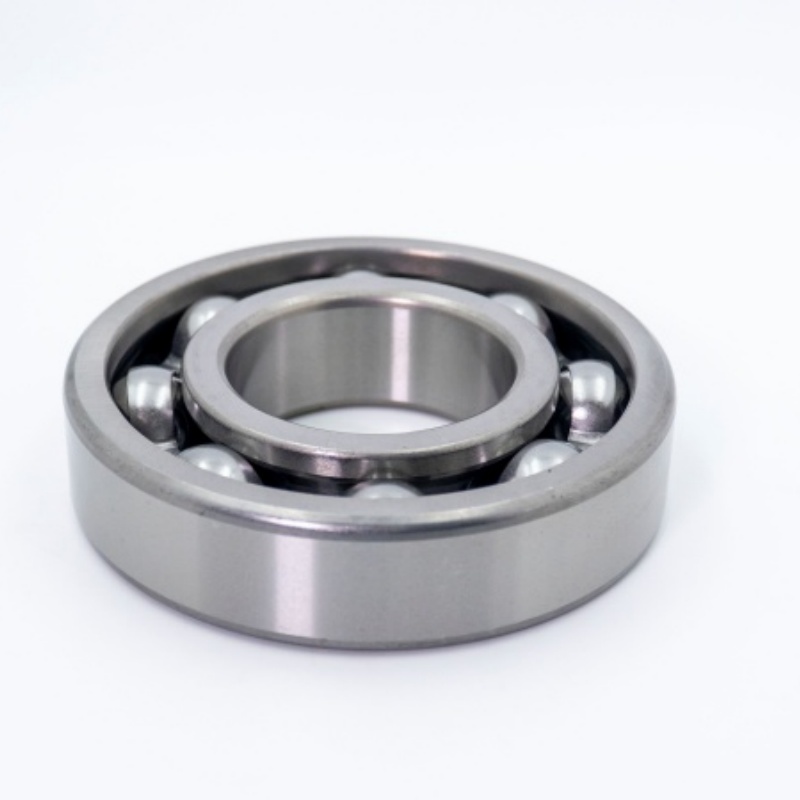
A boul pote uses spherical balls to separate its inner and outer rings. Because a ball makes a very small point of contact with the raceways, a boul pote generates very little friksyon. This low-friction characteristic makes them ideal for high-speed applications. However, because the chay is concentrated on such a small area, their load capacities are generally lower than those of roller bearings of the same size. Think of it like trying to stand on a single nail versus lying on a bed of nails—the force is the same, but the pressure is vastly different.
A Portant roulo, on the other hand, uses cylindrical, spherical, or tapered rollers. Instead of a point contact, these rollers create a line of contact with the inner and outer raceways. This significantly larger contact area allows roller bearings to support much heavier radyal and, in some cases, axial loads. This makes them the go-to choice for heavy-duty machinery in industries like mining, construction, and steel production. The trade-off is slightly higher friksyon compared to a boul pote, which can limit their maximum operating speed.
Which Type of Ball Bearing is Right for My Industrial Application?
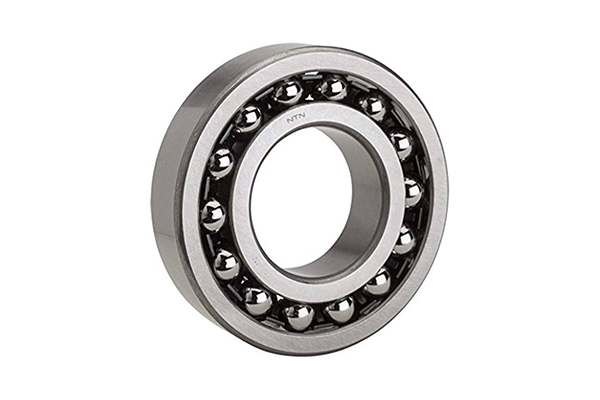
Se pa tout ball bearings are designed the same. Within this category, there are several specialized types, each engineered for specific chay conditions and performance requirements. The most common Kalite pote in this family is the deep groove boul pote. It features deep raceway grooves on the inner and outer ring, allowing it to support moderate radial and axial loads in both directions. Its versatility and high-speed capability make it the most widely used palye in the world, found in everything from electric motors to gearboxes.
Another important type is the angular contact boul pote. These bearings are designed with raceways that are offset relative to each other in the direction of the palye axis. This design allows them to accommodate significant combined loads (both radial and axial loads simultaneously). They are often used in pairs to handle axial forces in both directions and are critical components in high-precision applications like machine tool spindles.
For applications where the primary chay è axial, a thrust palye is the correct choice. A thrust bearing, specifically a ball thrust bearing, is designed to handle loads that are parallel to the bwa. It cannot handle much radial load. These bearings are widely used in applications like automotive transmissions and screw jacks. Making the right bearing selection from these options is the first step toward ensuring a long service life and preventing premature failure.
How Do Roller Bearings Handle Heavier Loads?
As we discussed, roller bearings excel in heavy-duty applications due to their line contact, which spreads the chay over a larger area. This fundamental design principle is the reason they are indispensable in industries where equipment is subjected to immense forces and harsh operating conditions. The specific shape of the roller further defines the pote a capabilities, leading to several distinct types of roller bearings.
The most straightforward type is the Silendrik roulo. As the name suggests, it uses cylindrical rollers. These bearings offer very high radial load capacity and are suitable for gwo vitès. Because the rollers are simple cylinders, a standard Silendrik roulo can accommodate almost no axial load. They are perfect for applications where a heavy bwa needs robust radyal support, such as in large industrial motors and rolling mills.
For applications involving not just heavy loads but also potential bwa misalignment, the spherical roller bearing is the unparalleled solution. This self-aligning palye features two rows of barrel-shaped rollers and a common esfè raceway in the bag ekstèn. This unique geometry allows the bag enteryè and roller assembly to rotate freely within the bag ekstèn, accommodating static and dynamic misalignment without stressing the palye. This makes the Portant esferik essential in equipment like crushers, vibrating screens, and conveyor systems, where perfect alignment is difficult to maintain.
What Makes Tapered Roller Bearings Unique for Combined Loads?
Tapered roller bearings are a unique and highly capable class of roller bearings. Their defining feature is that the inner and outer ring raceways, as well as the rollers themselves, are cone-shaped. This tapered geometry is ingeniously designed so that the surfaces of the raceways and the roller axes, if projected, would all meet at a common point on the main axis of the palye. This construction makes BEARINGS roulo kon perfectly suited to accommodate heavy combined loads—that is, both radial and axial loads acting at the same time.
The ability to handle significant axial load is a major advantage. While a deep groove boul pote can handle some axial load, a kon woule woule can handle much more. Furthermore, the steepness of the cone angle determines the ratio of axial pou radial load capacity; a steeper angle gives a higher axial load capacity. Because of their design, these bearings can typically only handle axial loads in one direction, so they are often mounted in opposing pairs (back-to-back or face-to-face) to counter axial forces from both directions.
You'll find tapered rollers in some of the most demanding applications. They are the standard for BEARINGS wou in cars and trucks, where they support the vehicle's weight (radial load) while also handling cornering forces (axial load). In the industrial world, they are essential in gearbox output shafts, rolling mill stands, and hoisting equipment—anywhere heavy radial and axial forces are present. For a procurement manager, specifying high-quality BEARINGS roulo kon is crucial for the safety and reliability of such critical machinery.
When Should I Choose a Spherical or Cylindrical Roller Bearing?
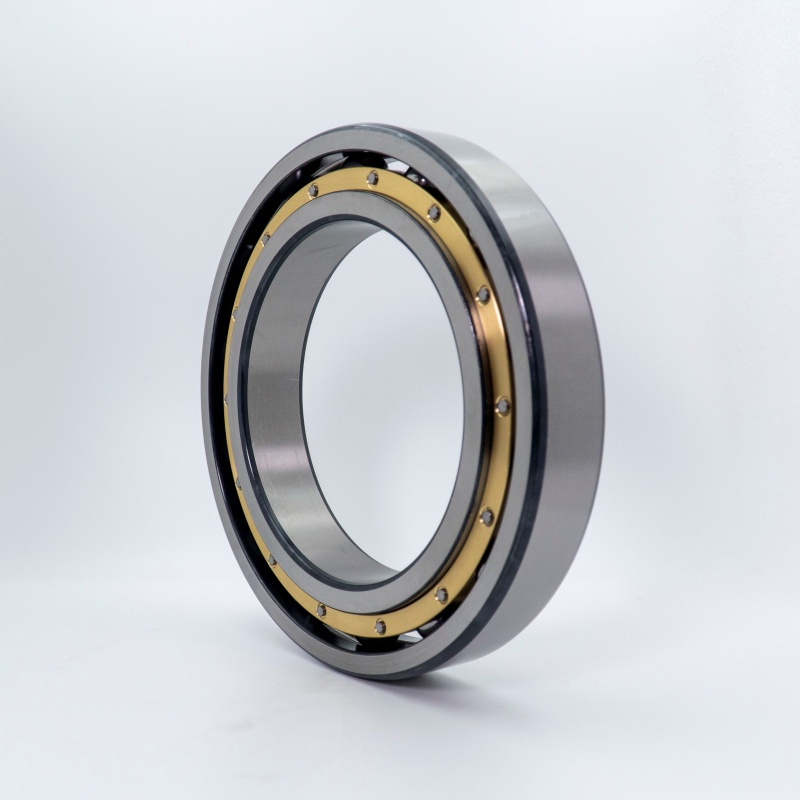
Chwa ki genyen ant yon esfè ou palye ak yon Silendrik roulo comes down to two primary factors: the nature of the chay and the likelihood of bwa misalignment. Both are powerhouse bearings for heavy radyal loads, but their specific strengths are distinct.
Choose a Silendrik roulo Lè ou genyen:
- Extremely High Radial Loads: Their pure line contact and robust construction give them one of the highest radial load capacities for their size.
- High-Speed Applications: The design of a Silendrik roulo generates less friksyon than other heavy-duty roller bearings, allowing it to operate effectively at higher speeds.
- Axial Shaft Expansion: Certain types of cylindrical roller bearings allow for free axial movement between the bwa and housing, which is useful for accommodating thermal expansion.
- Good Alignment: The critical condition is that the application must have very little to no misalignment. A Silendrik roulo is not designed to tolerate angular deviation between the inner and outer rings.
In contrast, you must choose a spherical roller bearing when you face:
- Heavy Radial Loads and Moderate Axial Loads: The angled orientation of the barrel-shaped rollers allows a Portant esferik to handle not only massive radyal loads but also significant axial loads in both directions.
- Aliyman: This is the key advantage. If the bwa can deflect under chay, or if the bearing housings cannot be machined and mounted with perfect alignment, a spherical roller bearing is the only reliable choice. It will self-align internally to prevent edge loading and premature Portant echèk.
- Chòk ak enpak charj: The inherent toughness and self-aligning capability make these bearings exceptionally durable in applications with heavy shocks, such as rock crushers or large gearboxes. Using a high-quality spherical roller bearing is essential in these scenarios.
Why is Proper Lubrication the Lifeline of Any Bearing?
No matter how well-made a palye is, its validite is entirely dependent on proper lubrication. A lubricant, whether it's grès or oil, performs several vital functions that are absolutely essential for a pote a survival. Its primary job is to form a microscopic film between the rolling elements, raceways, and cage. This film prevents direct metal-to-metal contact, which would cause increased friction, rapid wear, and catastrophic failure.
Beyond preventing wear, grese serves other critical roles:
- Reduces Friction and Heat: By separating the moving surfaces, the lubricant minimizes the energy lost to friksyon, which in turn helps manage the operating temperature nan la palye.
- Prevents Corrosion: A lubricant creates a protective barrier on the highly polished surfaces of the palye, shielding them from moisture and contaminants that could cause rust and corrosion.
- Flushes Away Contaminants: In oil-lubricated systems, the circulating lubricant helps to carry away wear particles and other debris, which can then be removed by a filtration system.
Choosing the right lubricant and applying the right amount at the right intervals is just as important as the initial bearing selection. Too little grès will lead to starvation and failure; too much grès can cause the palye to overheat due to churning. Following manufacturer recommendations and establishing a disciplined re-lubrication schedule is a low-cost way to dramatically increase the service life nan ou palye assets and reduce maintenance costs.
Are Metal Bearings Always the Best Choice? A Look at Alternatives.
For the vast majority of industrial applications, traditional steel bearings are the optimal choice. The chrome steel used in bearing manufacturing offers an exceptional combination of hardness, fatigue resistance, and cost-effectiveness. Bearings are typically made from this material because it provides the durability needed to handle heavy loads and the precision required for smooth operation. At VPK Bearing, we use high-grade steel to ensure our bearing products meet the rigorous demands of heavy industry.
However, in certain extreme environments, alternative materials can offer significant advantages. The most prominent of these are ceramic bearings. These high-performance bearings use rolling elements made from materials like silicon nitride. Ceramic balls are significantly harder, lighter, and smoother than steel. This results in a palye that can run at much higher speeds with less heat generation.
Ceramic bearings offer several key benefits:
- Higher Speeds: Their lower weight reduces centrifugal forces, allowing for a much higher operating speed.
- Lower Friction: The superior roundness and lower coefficient of friction of ceramic balls can lead to greater efficiency.
- Corrosion Resistance: Ceramic is inherently resistant to corrosion and requires less grese.
- Non-Conductive: Ceramic is an electrical insulator, which prevents electrical arcing through the palye in applications like electric motors—a common cause of Portant echèk.
The main drawback of full ceramic bearings or hybrid ceramic bearings (steel rings with ceramic balls) is their significantly higher cost and lower tolerance for shock loads compared to metal bearings. They are typically reserved for specialized, high-performance applications where their unique properties justify the investment, such as in high-speed machine tools or aerospace equipment.
What are the Key Factors in Bearing Selection to Avoid Failure?
Making the optimal bearing choice from the outset is the most effective strategy to prevent Portant echèk and minimize operating costs. As a procurement professional, your decision should be guided by a thorough understanding of the application's specific demands. Simply replacing a failed palye with an identical one without analyzing the root cause of failure is a missed opportunity for improvement.
Isit la yo se key factors to consider during the bearing selection process:
- Loads (Magnitude and Type): This is the most important factor. You must know the radyal ak axial Chaje la palye will experience. Is the chay steady, or does it involve shock and vibration? The magnitude of the chay will guide you toward a boul pote for lighter loads or a Portant roulo for heavier ones. The direction of the chay will determine if you need a deep groove, angular contact, or thrust bearing.
- Rotational Speed: The required operating speed is critical. Ball bearings offer excellent performance in high-speed applications, while some roller bearings have speed limitations due to higher friksyon. The speed rating in the manufacturer's catalog must be respected.
- Aliyman: Real-world machinery is rarely perfectly aligned. You must assess whether the bwa might deflect or if mounting surfaces are not perfectly parallel. If misalignment is a possibility, a self-aligning boul pote oswa yon spherical roller bearing is essential.
- Anviwònman opere: Consider the ambient conditions. Will the palye be exposed to extreme temperatures, moisture, dirt, or corrosive chemicals? These factors influence the choice of palye material, sealing options (shields or seals), and the type of lubricant required. For example, a reliable Silendrik roulo with proper seals is vital in a contaminated environment.
By systematically evaluating these several factors, you can confidently select a palye that is not just a replacement part, but a genuine solution engineered for longevity and reliability in its specific task.
How Can I Identify Quality Ball Bearings and a Reliable Manufacturer?
In an industry flooded with options, distinguishing between high-quality bearing products and substandard alternatives can be challenging. However, for a risk-averse manager, focusing on quality is paramount. A low-cost palye that fails prematurely will always be more expensive than a quality component due to downtime and collateral damage. The quality of a palye is determined by the precision of its manufacturing and the materials used.
When sourcing quality ball bearings, look for a manufacturer who can demonstrate:
- Material Certification: A reputable manufacturer like VPK Bearing can provide documentation on the grade of steel used. High-purity, vacuum-degassed steel provides superior fatigue life and is a hallmark of a quality palye.
- ISO Certification: Certifications like ISO 9001 indicate that the manufacturer adheres to internationally recognized quality management standards throughout the bearing manufacturing process. This ensures consistency from batch to batch.
- Precision Tolerances: Yon bon kalite palye will have tight dimensional and rotational accuracy tolerances (ABEC or ISO class). This ensures a proper fit on the bwa and in the housing, reducing vibration and increasing validite. You can always count on a versatile component like a Deep Groove boul pote to be manufactured to these exacting standards.
- Transparency and Support: A reliable partner is willing to provide technical data sheets, chay ratings, and engineering support. They view themselves as part of your success, not just a supplier. They understand your pain points and work with you to provide a reliable supply chain.
At Shandong Yueheng Precision Bearing Manufacturing (VPK Bearing), we have built our reputation on these principles. As an ISO 9001-certified factory in the heart of China's Portant endistri, we combine advanced manufacturing technology with a deep commitment to quality control. We understand that our success is directly tied to the operational reliability of our customers' machinery, and we are dedicated to being the dependable partner you need to prevent failure and maximize uptime.
Post time: Nov-11-2025