

As a manager in charge of procurement or maintenance, you understand that the largest and most complex machinri is only as reliable as its smallest components. You’ve likely experienced the frustration of production grinding to a halt because of a single failed part. Among these critical parts, the humble boul pote is a true unsung hero. This article is designed to be your practical guide to understanding what a boul pote is, how ball bearings work, and why selecting the right Kalite pote is crucial for operational success. We'll explore the different types of ball bearings, their applications, and what separates a high-quality, reliable boul pote from one that could fail prematurely. For a pragmatic manager like you, this knowledge is key to reducing downtime and ensuring the long-term health of your equipment.
How Do Ball Bearings Work to Reduce Friction?
The fundamental purpose of a boul pote is to reduce friction between moving parts. Imagine trying to drag a heavy wooden box across a concrete floor. The large amount of sliding friction makes it incredibly difficult. Now, imagine putting a few strong pipes under the box and rolling it. The task becomes dramatically easier. This is the exact principle behind how a boul pote works. It replaces high-resistance sliding friction with low-resistance rolling friction.
A boul pote achieves this by using a series of smooth, spherical balls trapped between two concentric rings. When a bwa (connected to the inner ring) rotates, the balls roll smoothly along the surfaces of both the inner and outer rings. Because a ball running along a surface has far less friksyon than a surface sliding against another, the energy required to turn the bwa is drastically reduced. This simple yet ingenious mechanism is what allows motors to spin efficiently, wheels to turn freely, and countless other mechanical processes to occur with minimal energy loss. Ball bearings reduce wear and tear, lower energy consumption, and are the foundational technology that enables the smooth operation of most modern machinri. These rolling-element bearings are truly essential.
This reduction in friksyon also has a critical secondary benefit: it minimizes heat generation. High friksyon creates heat, which can damage machine components and degrade lubricants, leading to premature failure. By effectively managing friksyon, a boul pote helps maintain stable operating temperatures, further contributing to the longevity and reliability of the equipment. Ball bearings are designed specifically to reduce friction between moving parts, a function that is vital for efficiency.
What is the Basic Structure of a Ball Bearing?
While there are many types of ball bearings, they all share the same fundamental anatomy. Understanding these components is key to appreciating how they function and what to look for in a quality palye. A basic structure of a ball bearing is elegant in its simplicity, yet every part is precision-engineered to work in perfect harmony.
The main bearing components are:
- Bag ekstèn: This is the larger, stationary ring that fits snugly into the housing of the machinri. Its inner surface is a smooth, grooved track, or "raceway," on which the balls roll.
- Bag enteryè: This is the smaller ring that fits tightly onto the rotating bwa. Its outer surface also has a raceway for the balls. The rotation of the bwa causes this ring to spin.
- Balls (Rolling Elements): These are the spherical components that sit between the inner and outer rings. They are the heart of the palye, as they are what allows for low-friksyon motion. They are typically made of hardened steel but can also be ceramic for special applications.
- Cage (or Retainer): This is the component that holds the balls in place, keeping them evenly spaced and preventing them from bumping into each other. The cage can be made from steel, brass, or synthetic polymers, depending on the application's speed and temperature requirements.
Together, this bearing assembly creates a self-contained system that can support loads while allowing for smooth, efficient rotation. The precision with which these palye components are manufactured is a direct indicator of the pote a quality and potential performance.
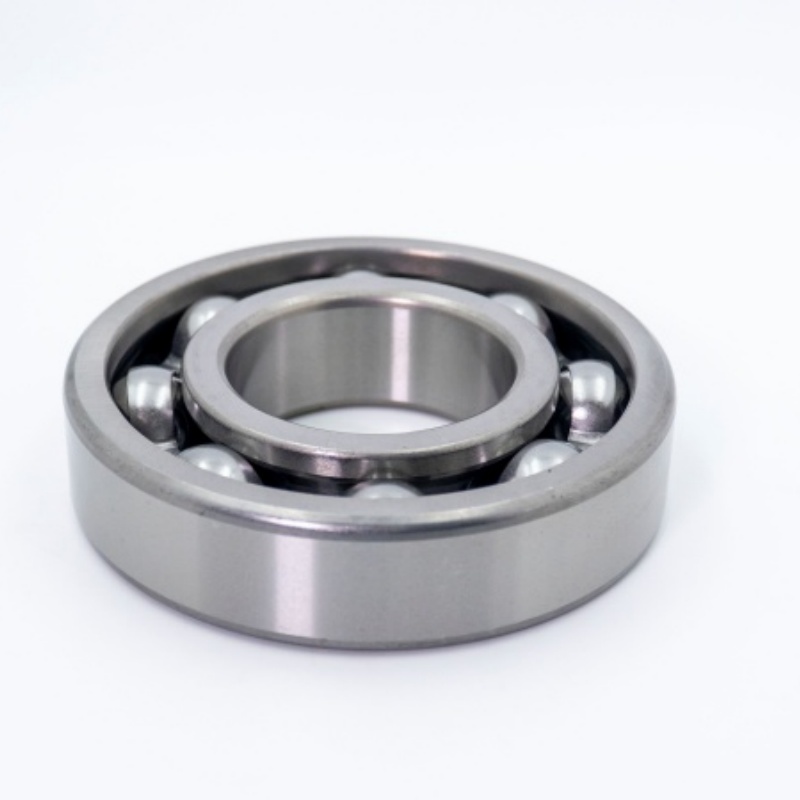
What are the Main Types of Ball Bearings Used in Industry?
Pandan ke tout ball bearings used in industry share a common purpose, they are not a one-size-fits-all solution. There are several different types of ball bearings, each designed to handle specific types of loads and operational conditions. Choosing the correct Kalite pote is one of the most important decisions in machine design and maintenance. A bearing used in the wrong application is a palye that is destined to fail.
The main categories are distinguished by the direction of the load they are designed to support:
- Radial Ball Bearings: These are designed primarily to support a radial load—a force that is perpendicular to the shaft's axis (like the weight of a pulley on a bwa).
- Thrust Ball Bearings: These are designed to support a thrust load (also called an axial load)—a force that is parallel to the shaft's axis (like the force exerted by a drill bit).
Within these broad categories, there are more specialized designs, such as the Deep Groove boul pote, angular contact ball bearingsak self-aligning ball bearings. We will explore each of these in more detail to help you understand where each type of ball bearing excels.
Why is the Deep Groove Ball Bearing the Most Widely Used Type?
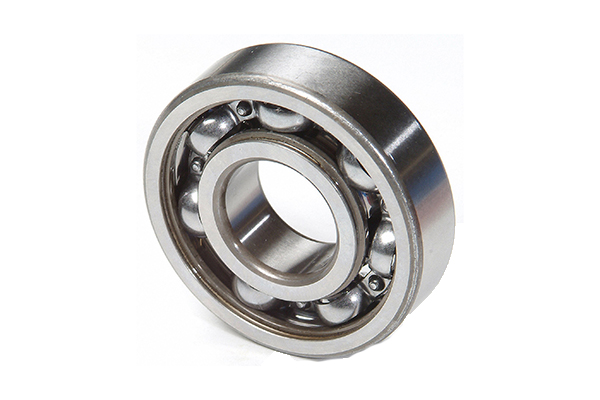
When people picture a generic boul pote, they are almost always thinking of a Deep Groove boul pote. This is, by a huge margin, the most versatile and widely used type de boul pote in the world. Its popularity stems from its simple design, robust performance, and excellent value. At VPK Bearing, the Deep Groove boul pote is one of our flagship products, essential to countless industries.
The defining characteristic of a deep groove ball bearing is the geometry of its raceways. As the name implies, both the inner and outer rings feature a deep, circular groove that closely matches the radius of the balls. This design provides excellent support for radyal loads. More importantly, it also allows the palye to handle moderate axial loads in both directions, making it incredibly versatile. This ability to accommodate both radial and axial loads is what sets it apart.
Because of its design, the Deep Groove boul pote is also suitable for high-speed operation, as it generates very little friksyon. You will find this boul pote everywhere: in electric motors, gearboxes, pumps, conveyors, power tools, and even household appliances like washing machines. For any application requiring reliable support and good speed capability without extreme loads or misalignment, the Deep Groove boul pote is almost always the correct and most cost-effective choice.
When are Angular Contact Ball Bearings the Correct Choice?
While a Deep Groove boul pote can handle some axial load, there are applications where the combined radyal ak axial forces are too great for it. This is where angular contact ball bearings come in. These are precision bearings designed specifically to handle significant combined loads simultaneously.
The key to their design is that the raceways on the inner and outer rings are offset from each other along the pote a axis. This creates a "contact angle" between the balls and the raceways. When a load is applied, it is transmitted through the palye along this angle. This allows the boul pote to support a much larger axial load than a deep groove ball bearing of the same size, in addition to its radial load.
Angular contact bearings are typically used in applications requiring high rigidity and rotational accuracy. Because a single angular contact ball bearing can only handle axial load in one direction, they are most often mounted in pairs (back-to-back or face-to-face) to provide support in both directions. You will find these ball bearings used in high-precision machinery like machine tool spindles, automotive differentials, and high-performance pumps, where both load capacity and accuracy are paramount.
How Do Self-Aligning Ball Bearings Handle Misalignment?
In an ideal world, every bwa would be perfectly straight and every palye housing perfectly aligned. In the real world of heavy machinri, this is often not the case. Shafts can deflect under heavy loads, and minor errors in mounting are common. If a standard Deep Groove boul pote is used in such a situation, it will be subjected to edge loading and internal stresses, leading to rapid failure. The self-aligning ball bearing is the elegant solution to this common problem.
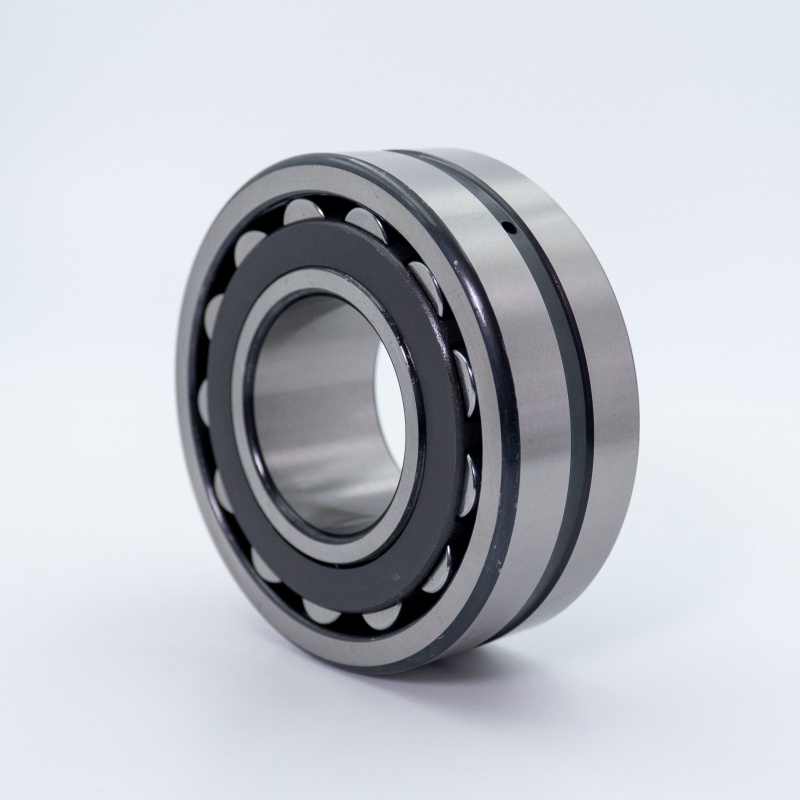
The magic of the self-aligning ball bearing lies in its bag ekstèn. Instead of a deep groove, the inner surface of the bag ekstèn is ground into a single, continuous spherical raceway. The palye has two rows of balls, and the inner ring and ball assembly can pivot freely within this spherical bag ekstèn. Sa pèmèt la palye to automatically compensate for several degrees of static or dynamic misalignment between the bwa and the housing.
Sa yo bearings are used in applications where maintaining perfect alignment is difficult or impossible. This includes agricultural machinri, long conveyor systems, and large fans where the support structures can flex. By using a self-aligning ball bearing, you can prevent the premature failures caused by misalignment, extending the service life of both the palye and the machine.
What is the Specific Function of Thrust Ball Bearings?
So far, we've focused on BEARINGS boul that primarily handle radyal loads. But what about applications where the main force is pushing along the length of the bwa? This is the job of the thrust ball bearing. Youn thrust bearing is designed for one purpose only: to support purely axial (or thrust) loads. It is not suitable for supporting any significant radial load.
A structure of a ball bearing designed for thrust is quite different from a radial bearing. Instead of concentric rings, thrust ball bearings consist of two "washer-like" rings with grooved raceways. The balls are housed in a cage between these two rings. One ring, the bwa washer, locates on the bwa, while the other, the housing washer, locates in the housing. When a thrust load is applied, it is transmitted directly through the balls from one washer to the other.
Ou pral jwenn thrust ball bearings used in applications like rotating tables, screw jacks, and automotive clutch release mechanisms. They are essential for any situation where a rotational motion needs to be supported against a strong axial force. It’s important to remember that if an application has both radyal and thrust loads, a different solution, like an angular contact ball bearing oswa yon Portant roulo, would be more appropriate.
What are Some Common Applications of Ball Bearings in Your Facility?
The truth is, once you start looking, you will find that ball bearings are used in nearly every piece of rotating equipment in your facility. Their ubiquity is a testament to their effectiveness and importance. The uses of ball bearings are incredibly diverse, underpinning the reliability of your entire operation.
Here are just a few common applications of ball bearings you likely encounter every day:
- Electric Motors: Every motor has at least two BEARINGS boul (usually deep groove ball bearings) to support the rotor and allow it to spin freely and efficiently.
- Pumps: Whether for water, chemicals, or slurries, pumps rely on BEARINGS boul to support the impeller bwa.
- Bwat: Ball bearings are used to support the gears and shafts within a gearbox, ensuring correct gear mesh and transmitting torque smoothly.
- Sistèm CONVEYOR: The rollers that move belts in conveyor systems each rotate on a set of BEARINGS boul.
- Fans and Blowers: Industrial fans use BEARINGS boul to support the fan blade assembly, allowing for high-speed, continuous operation.
Beyond these heavy industrial uses, ball bearings are also essential in countless other areas, from automotive wheels and transmissions to office equipment and power tools. This vast range of applications demonstrates why a reliable supply of high-quality BEARINGS boul is so critical for any MRO or procurement department.
Where are Miniature Ball Bearings Used?
While most of our discussion has focused on industrial-sized bearings, there is a whole world of miniature ball bearings that are critical in high-tech and precision applications. As the name suggests, miniature bearings are incredibly small, sometimes with an inner diameter of just a few millimeters. Despite their tiny size, they perform the same essential function: to reduce friction and support rotating parts with high precision.
These tiny but mighty BEARINGS boul are essential components in industries where space and weight are at a premium. Miniature ball bearings are commonly used in:
- Medical and Dental Instruments: High-speed dental drills and surgical tools require ball bearings that are both small and capable of extremely high rotational speeds.
- Computer and Electronics: Hard disk drives, cooling fans, and printers all use ball bearings for precise, quiet operation.
- Aerospace and Robotics: Drones, robotic arms, and guidance systems rely on miniature ball bearings for low-friksyon, reliable movement.
- Flow Meters and Instruments: Precision measurement devices use high-quality miniature ball bearings to ensure their moving parts rotate with minimal resistance for accurate readings.
These applications often demand not just small size, but also extreme precision and special materials. The manufacturing of miniature ball bearings is a highly specialized field, showcasing the incredible scalability of boul pote technology.
How are Bearings Made and Why Does Material Matter for the Life of Ball Bearings?
The performance and life of ball bearings are directly determined by the quality of their manufacturing process and the materials from which they are made. As a procurement manager, understanding what goes into a quality boul pote is essential for differentiating a reliable product from a substandard one. Bearing manufacturers like us at VPK Bearing follow a meticulous process to create bearings of the highest quality.
Ball bearings are typically made from a special type of high-carbon chromium steel. This material is chosen for its exceptional hardness, wear resistance, and fatigue life after it has been heat-treated. The process involves:
- Forging and Machining: The inner and outer rings are forged from steel rods and then precision-machined to their basic shape.
- Heat Treatment: This is a crucial step where the components are heated and quenched to achieve the extreme hardness necessary to withstand high contact pressures.
- Grinding and Honing: The raceways are ground and then honed or polished to an incredibly smooth, precise finish. The quality of this surface finish is critical for minimizing friksyon and maximizing palye life.
- Assembly and Inspection: The rings, balls, and cage are assembled, and the completed boul pote undergoes rigorous quality checks for noise, vibration, and dimensional accuracy.
Material choice is paramount. While chrome steel is the standard, some BEARINGS boul are made from stainless steel for better corrosion resistance. For extreme applications, ceramic bearings or hybrid bearings that use ceramic balls offer benefits like higher speed capability and electrical insulation. A manufacturer's commitment to using high-purity, properly heat-treated steel is a key indicator of the reliability you can expect from their boul pote products.
Why are Quality Ball Bearings Crucial for Your Operation's Success?
In the end, all these technical details come down to one simple fact: bearings are crucial for your operational success. A low-cost, low-quality boul pote might save a few dollars on the initial purchase order, but it presents a huge risk to your operation. Premature failure of a single boul pote can lead to thousands of dollars in lost production, collateral damage to expensive machinri, and increased labor costs for emergency repairs.
For a detail-oriented manager like you, the total cost of ownership is what truly matters. Investing in a high-quality boul pote from a reputable manufacturer provides peace of mind and tangible benefits. A quality boul pote ensures:
- Reliability: It will perform as expected for its calculated service life, allowing you to plan maintenance schedules proactively rather than reactively.
- Efficiency: High-precision manufacturing and smooth raceways minimize friction, leading to lower energy consumption.
- Safety: Preventing unexpected catastrophic failures protects your personnel and your valuable equipment.
- Consistency: Reputable manufacturers with strong quality control systems, like our ISO 9001-certified facility, deliver consistent performance from batch to batch. A high-quality Deep Groove boul pote will perform predictably every time.
Choosing a manufacturing partner like VPK Bearing means you are prioritizing long-term reliability over short-term savings. We understand that our BEARINGS boul are not just components; they are a critical investment in the uptime and profitability of your entire operation.
Kle takeaways sonje
- Ball bearings work by converting high-resistance sliding friksyon into low-resistance rolling friksyon, which is essential for efficiency in all rotating machinri.
- The four main components are the bag ekstèn, inner ring, balls, and cage. The quality of each is vital.
- There are different types of ball bearings, each designed for specific loads. The most common is the versatile Deep Groove boul pote.
- Specialized types like angular contact, self-aligningak thrust ball bearings solve specific challenges related to combined loads, misalignment, and axial loads.
- A life of ball bearings is heavily dependent on the quality of the steel used and the precision of the manufacturing process.
- Investing in quality BEARINGS boul from a trusted manufacturer is a critical strategy to reduce downtime, enhance safety, and lower the total cost of ownership.
Post time: Nov-19-2025